There are only two references to demons in the OT, both containing the word
shedim (plural of
shed), and they are
Deuteronomy 32:17 and
Psalm 106:37, which are pretty close parallels of each other.
The greater context of these two verses shows the following:
- The children of Israel intermingled with heathen nations
- The children of Israel learned about and began to submit themselves to the idols of these heathen nations
- These idols of the heathen nations were the gods of these peoples
- This idolatry to the gods of the heathen nations involved sacrifice, particularly human child sacrifice
The word
shed and its plural
shedim do not appear to be of Hebrew origin, but seem to either come from Akkadian
shedu, referring to a guardian spirit, or from the Assyrian
sedim, which typically appeared as bull colossi, or bulls with human heads and large wings:
https://en.wikipedia.org/wiki/Shedim
https://biblehub.com/hebrew/7700.htm
See below:
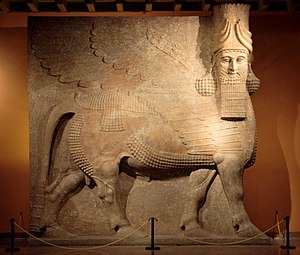
For more, read:
https://www.metmuseum.org/toah/hd/rdas/hd_rdas.htm
When the OT was translated into Greek, the two uses of
shedim were both translated as
daimonion:
https://biblehub.com/sepd/psalms/106.htm
https://biblehub.com/sepd/deuteronomy/32.htm
This is of course where we get the Latin word
daemon, hence "demon" in English.
See:
https://www.dictionary.com/browse/demon
https://www.dictionary.com/browse/daemon
The Septuagint translation is interesting because when it was created a couple of centuries prior to the New Testament when the Greek word
daimonia did not always refer to some form of sentient, external spirit or god-like being, but sometimes to a force like fate, or even to a completely human, internal ideological possession. A good example of this would be Socrates, as found in Plato's Apology. See here:
http://classics.mit.edu/Plato/apology.html
Centuries later, Marcus Aurelius frequently used the same word in his Meditations in the same way:
https://modernmythology.net/socrates...s-c5c080641ae5
There, Aurelius claims that every human has a
daimonia, all of which come from Zeus.
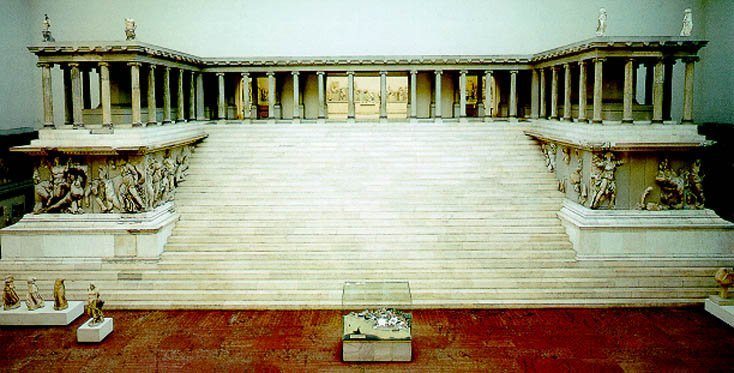
This is interesting because only a few decades before Aurelius wrote, Jesus spoke to John about Pergamon and the throne of Satan (
Revelation 2:13).
This is a reference to a massive altar to Zeus, which is currently on display in the Berlin Museum:
It may be, therefore, that demons such as we've thought of them are not roaming spirits of unknown origin, but rather, of terrible states of mind that people can enter into under the duress of Satan or the Dragon of Revelation, through the spirit of antichrist.
What then manifests isn't a separate, external entity that has infected or invested a person, but rather, a part of that person's human spirit that has become completely possessed by corruption and wicked, like invisible cancer, ostensibly brought about by idolatry and some form of literal or even figurative human sacrifice, the two most common religious experiences of people coming from heathen nations. It is this then, that is cast out or exorcized, just as a tumor is removed from the body.
The reason it seems like a completely separate entity is because the person experiencing the issue has been spiritually split in two (a pretty good way of understanding what the trauma of sin does to someone). James called this
di'psuchos, translated as "double-minded". It literally means "two-souled" (
James 1:8).
See:
https://biblehub.com/greek/1374.htm
This compound phrase can also mean being of "two-selves". One "self" is the one revealed to the world, that passes for normal so as to function in human society, the other "self" is the secret self, possessed of chaos and disorder, carnality, and corruption.
This second "self" manifests under certain circumstances, particularly in the presence of God and His people, and seems like a foreign entity that has invaded the person, when in reality it is merely the second "self" in all of its horrific woe and iniquity coming to the front.
If this is so, when Jesus then exorcizes someone, He casts out of them the pervasive evil present in the second "self" rends that person from the enthralling power of the Dragon by severing the connection to the spirit of antichrist, and then unifies the person's soul, bringing healing, putting that person into a right state of mind.